From waste to monomers: a system perspective on carbon and material balances for circular polymer production
Abstract
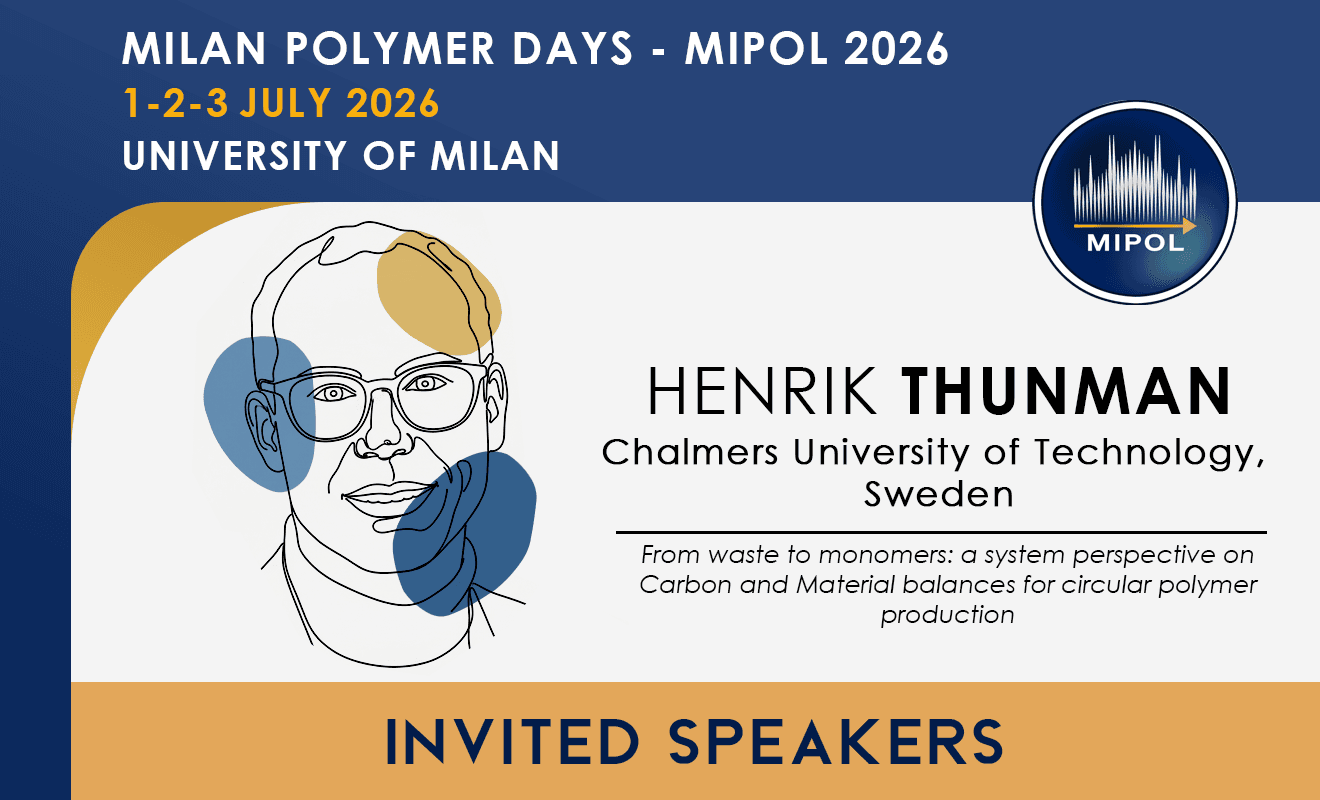
A system-level perspective on circular polymer production—explicitly addressing carbon, material, and energy balances—is essential if polymer-based materials are to play a credible role in a future circular society. In such a system, replacing fossil-based feedstocks requires more than incremental improvements in recycling efficiency; it demands an integrated view of scale, resource utilization, and long-term material development.
Long-term circularity in polymer systems cannot be achieved solely by preserving existing polymer structures through cascade recycling. Instead, a truly circular system must allow polymers to be repeatedly rebuilt from fundamental chemical building blocks. This enables future polymer design to evolve independently of today’s waste compositions, while still maintaining performance, functionality, and material value.
From this perspective, thermochemical recycling routes play a central role, particularly when large volumes of heterogeneous plastic waste must be managed. Two main pathways are addressed on equal footing: direct recovery of monomers via direct thermochemical cracking, and conversion of plastics into gaseous products that can be further processed through synthesis gas routes. At the system level, these pathways should be understood as complementary rather than competing, with their relative importance governed by feedstock composition, scale, and overall resource efficiency.
A key constraint is volume. To achieve meaningful impact on the polymer material system, strict feedstock specifications cannot be imposed without sacrificing scale. This inherently limits full selectivity toward monomers and makes balanced utilization of carbon unavoidable. From a total resource perspective, maximizing the combined yield of high-value products—rather than optimizing a single pathway in isolation—is therefore essential.
Within this framework, research and development at Chalmers University of Technology is presented, based on results obtained from an industrial-scale pilot. The work focuses on the development of steam cracking concepts that enable direct conversion of mixed plastic waste into monomers compatible with existing petrochemical clusters. The approach targets the production of monomer-rich product streams in a single step, while maintaining high tolerance toward heterogeneous waste feedstocks. Remaining gas fractions are integrated with synthesis-based routes to maximize overall carbon utilization.
The talk aims to provide polymer researchers with a system-oriented basis for developing future polymers and recycling strategies that are compatible with large-scale waste streams, high-value material recovery, and a circular carbon economy.